Curcuma Siam™
A Complete Guide for Buyers and Growers
6/9/2026
Explore Curcuma Siam™, often referred to as Siam Tulip, with wholesale varieties, production tips, crop timing, and sourcing from Foremost.
Curcuma Siam™, often referred to as Siam Tulip, is a premium tropical flowering plant valued for its vibrant color, lush foliage, and distinctive appearance. Its strong visual appeal makes it an excellent choice for spring and summer retail programs, tropical displays, patios, and premium flowering plant assortments.
For buyers, Curcuma offers a distinctive addition to seasonal merchandising. For growers, it provides an opportunity to build a consistent, market-ready crop through careful variety selection, production planning, and timing.
Foremost is the exclusive distributor of Curcuma Siam™ in the United States, Canada, and the Caribbean. The program is supported by more than 30 years of Curcuma breeding and development experience from KP Holland, offering growers access to specialized varieties, young plants, liners, production guidance, and technical support.
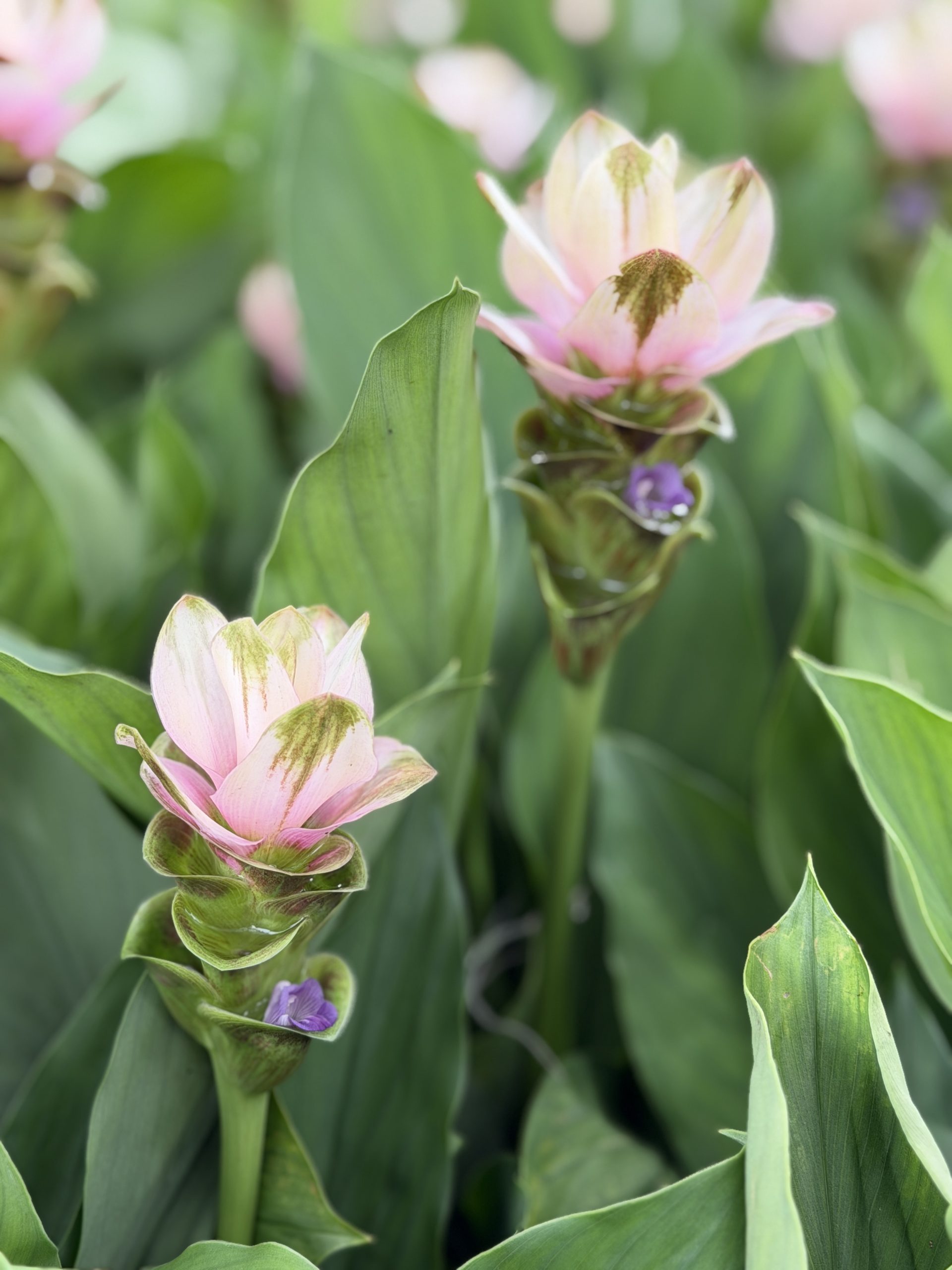
What Is Siam Tulip?
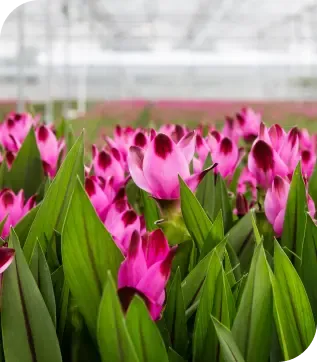
Siam Tulip is a trade name often used for Curcuma Siam™. Despite the name, Curcuma Siam™ is not a true tulip. The flower shape is similar to that of a tulip, which is part of how the name is recognized commercially, but the crop itself is a tropical flowering plant recognized for its upright foliage, colorful flower bracts, and distinctive form.
Curcuma Siam™ should be distinguished from common turmeric. Although both belong to the broader Curcuma group, Curcuma Siam™ is grown for its flowering qualities rather than culinary or medicinal use.
Its commercial value comes from bract color, flower presentation, plant structure, foliage, finished-plant quality, and retail appeal.
Foremost’s Curcuma Siam™ Program
The Curcuma Siam™ program offers varieties selected for strong commercial performance. Key characteristics include:
Color and uniformity: Consistent appearance across a crop.
Plant structure: Growth habits suited to different pot sizes and retail programs.
Flower presentation: Flower count and bloom placement relative to the foliage.
Production reliability: Varieties that support planned growing schedules and target finish dates.
Foremost helps growers coordinate starter material, variety availability, production timing, and technical guidance to meet their specific growing and retail objectives.
Curcuma Siam™ Varieties
Foremost currently offers 10 varieties:
Curcuma Siam™ Pink Shadow PPAF
Curcuma Siam™ Salsa
Curcuma Siam™ Sanna
Curcuma Siam™ Shadow PP31,341
Curcuma Siam™ Sisto PPAF
Curcuma Siam™ Solar PP30,441
Curcuma Siam™ Sparkling PPAF
Curcuma Siam™ Splash PP25,124
Curcuma Siam™ Sublime PPAF
Curcuma Siam™ Swing PPAF
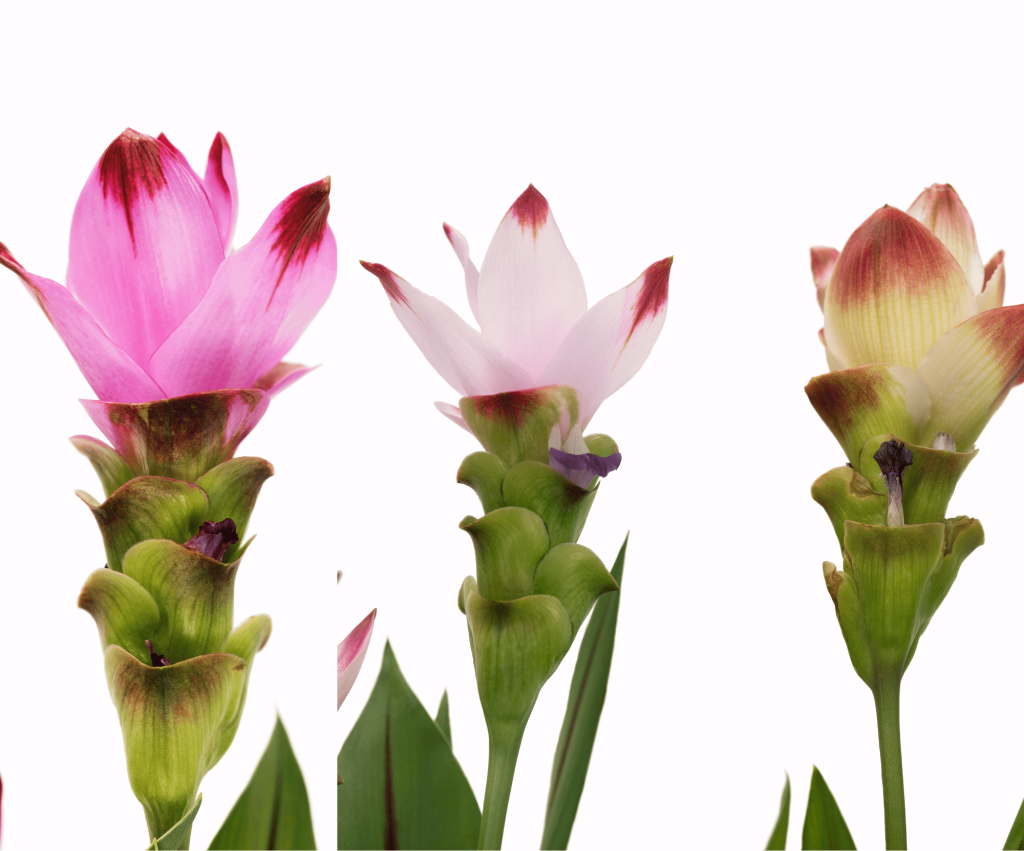
The collection offers a range of white, yellow, pink, purple, and bicolor options, giving growers and buyers flexibility in building coordinated seasonal assortments.
Compact varieties work well in smaller pots and tabletop displays. Medium-sized plants offer a balanced combination of flowers and foliage for standard retail programs, while larger varieties create bold tropical statements for patios, containers, and premium displays.
Selecting complementary colors and plant sizes helps retailers create more engaging displays and gives growers flexibility across different production goals.
Curcuma Production Basics
A successful Curcuma crop depends on consistent environmental conditions, proper nutrition, reliable irrigation, and early monitoring. The following targets summarize the production guidelines.
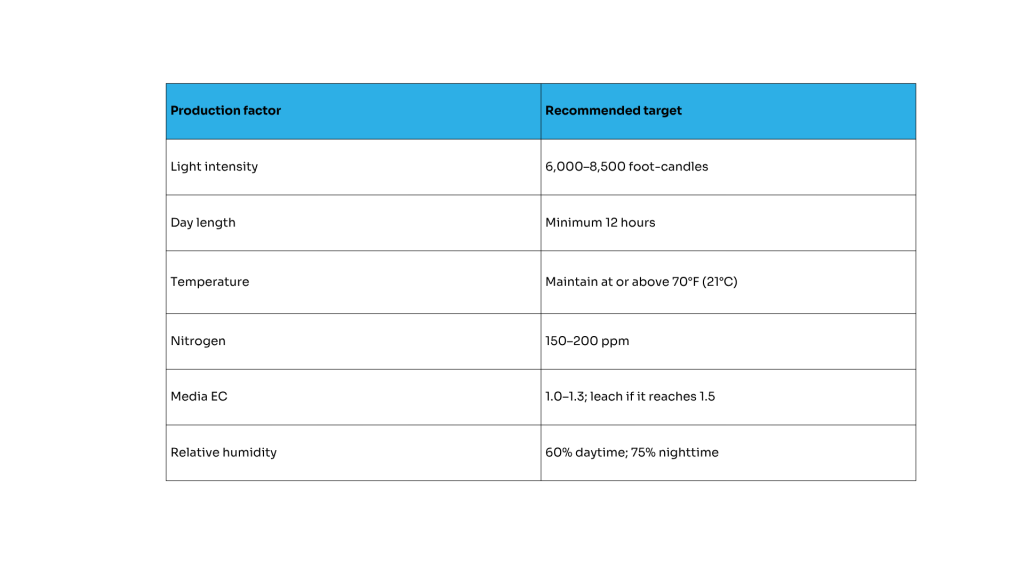
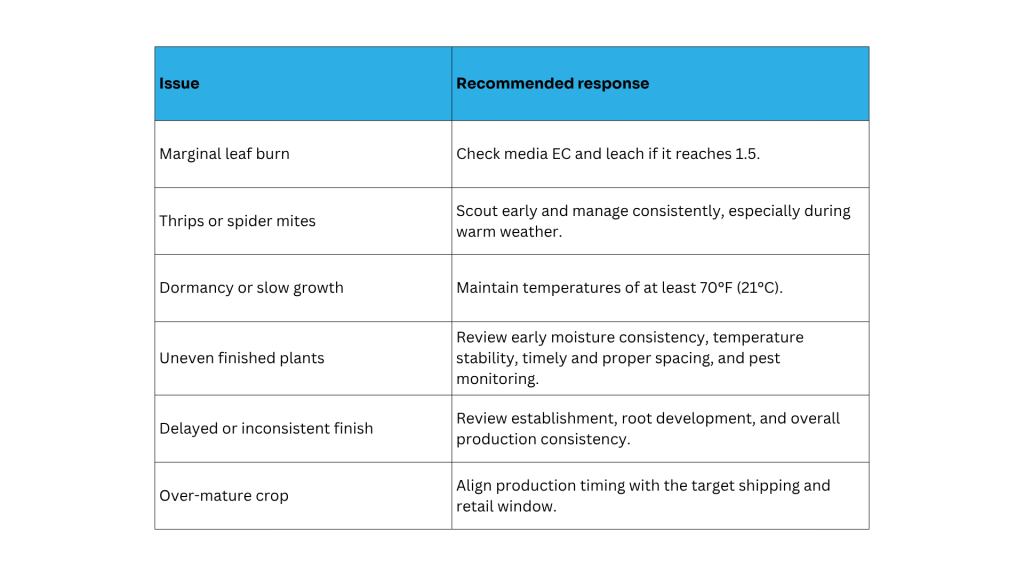
Supplemental lighting may be beneficial during low-light seasons. Temperatures below 70°F can slow growth and increase the risk of dormancy.
Irrigation: Keep moisture consistent as roots fill the pot. Ebb-and-flood systems can produce good results. Water heavily at planting to establish the crop, then maintain steady moisture throughout production.
Fertility: Use a balanced fertilizer appropriate for tropical flowering crops. Monitor media electrical conductivity (EC) to help prevent marginal leaf burn.
Pest management: Scout early and consistently for thrips and spider mites, particularly during warm production periods.
Humidity and airflow: Maintain appropriate humidity and spacing to support healthy growth, crop uniformity, and finished-plant quality.
Spacing for Curcuma Production
Proper spacing promotes shoot development, airflow, uniform growth, and an attractive finished crop.
Recommended final spacing:
10-inch pots: 32 pots per 100 square feet
8-inch pots: 50 pots per 100 square feet
6-inch pots: 90 pots per 100 square feet
Plan spacing early to balance plant quality with greenhouse efficiency.
The 16-Week Curcuma Production Timeline
Curcuma production can be divided into four phases, from initial establishment to shipping and premium finish. Monitoring each stage helps growers maintain consistency and meet target retail dates.
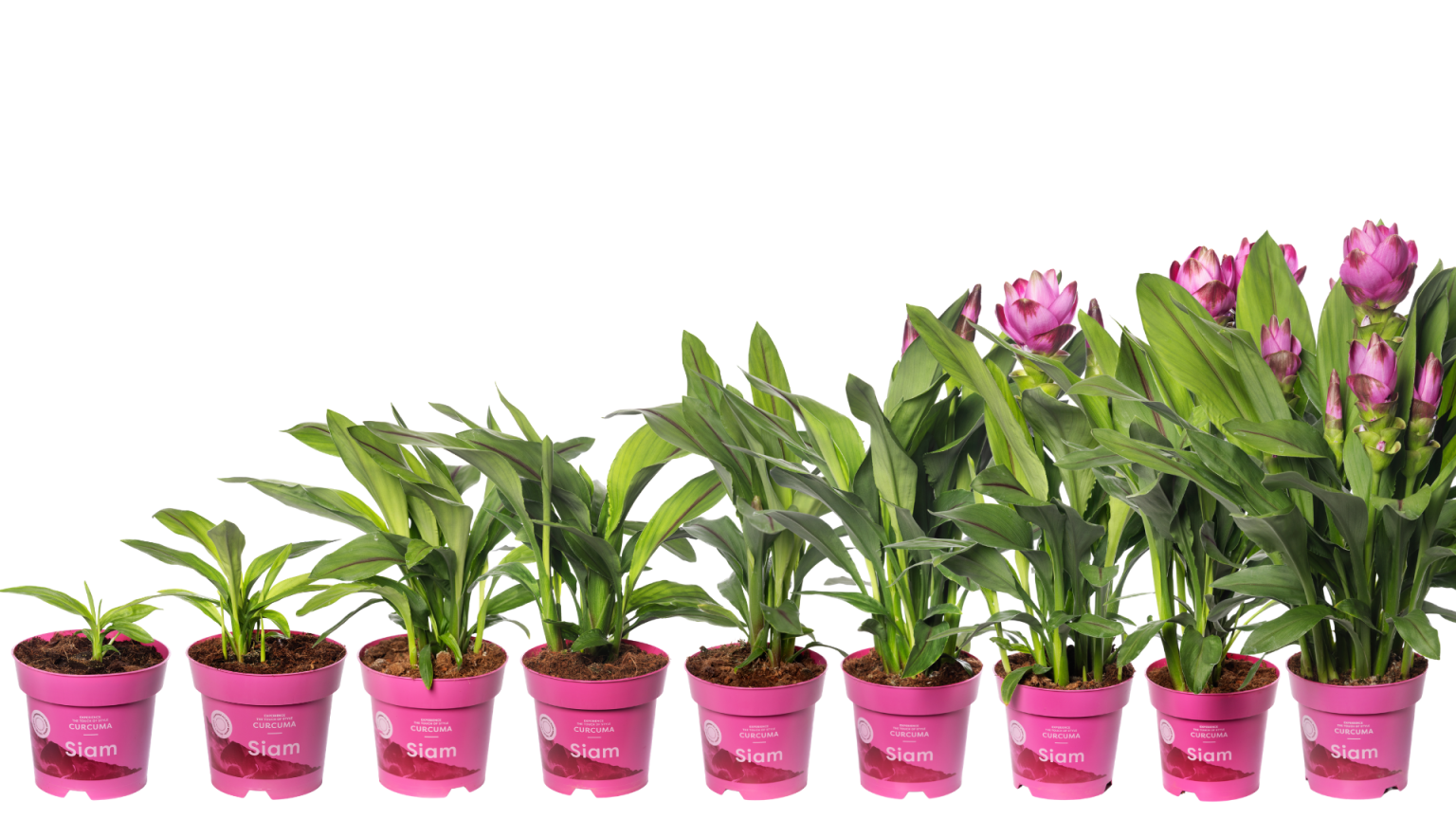
Phase 1: Establishment — Weeks 1–2
The goal is to establish strong root development and uniform growth.
Maintain light within the recommended range and protect the 70°F minimum temperature.
Water thoroughly at planting, then maintain consistent moisture.
Begin feeding at 150–200 ppm nitrogen.
Monitor for low light and cool temperatures, which can delay growth and increase dormancy risk.
Phase 2: Root Development and Uniformity — Weeks 3–6
During this phase, roots should develop rapidly and the crop should remain uniform. Early consistency is essential to achieving an even finish later.
Maintain consistent irrigation and nutrition.
Keep media EC between 1.0 and 1.3; leach if it reaches 1.5.
Scout regularly for thrips and spider mites.
Aim for more than 50% root-zone fill by week 4.
Uneven growth at this stage can lead to inconsistent finished plants.
Phase 3: Height and Finish Preparation — Weeks 7–10
By this stage, the crop’s structure should be established, and growth should progress evenly toward the desired finish.
Maintain consistent feeding, moisture, and pest monitoring.
Evaluate height-control needs early, particularly for larger varieties.
Establish the target finished-plant size and appearance before making adjustments.
If appropriate for the crop and production goals, plant growth regulator (PGR) options such as Bonzi or Piccolo drenches at 0.5 ppm may be evaluated according to applicable product directions and expert guidance.
Avoid frequent, unnecessary changes to growing practices. A consistent strategy helps reduce variability and achieve a predictable finish.
Phase 4: Bloom, Shipping, and Premium Finish — Weeks 11–16
During the final phase, bloom begins and the shipping window opens. Growers should determine whether the program prioritizes rapid turnover or a more developed flowering presentation.
Week 11: The crop enters the ship-ready stage as bloom begins.
Week 12 onward: Increasing bloom provides stronger visual appeal and selling potential.
Around week 15: Premium finish is reached, defined as two or more open blooms.
Week 16: Holding the crop too long can increase quality risks and reduce control over retail presentation.
Define the target finish early and grow toward it to ensure the crop reaches retailers at the desired stage.
Shipping and Retail Handling
Curcuma is a tropical crop that requires careful handling to protect flower quality and overall presentation.
Shipping recommendations:
Use open carts when possible.
If sleeves are necessary, choose paper sleeves.
Avoid shipping plants excessively wet.
Keep water out of the flower cups.
Retail handling: Keep finished plants away from cold storage areas, freezers, and cold airflow. Appropriate temperatures and display conditions help preserve plant quality, bloom presentation, and the customer experience.
Troubleshooting Curcuma Production
Early identification of production issues helps protect crop quality and reduce losses.
Where to Source Curcuma Siam™ Wholesale
Foremost supplies Curcuma Siam™ young plants and liners for growers developing tropical flowering plant programs.
Starter material is supplied as a tissue-culture cell pack that arrives rooted and just beginning to produce new shoots, providing growers with a clean, consistent starting point for production.
As the exclusive distributor of Curcuma Siam™ in the United States, Canada, and the Caribbean, Foremost can help growers:
Explore available varieties.
Coordinate starter material with production schedules.
Plan crops around target retail dates.
Review current availability and lead times.
Identify opportunities for seasonal and premium flowering plant programs.
Offer technical advice and guidance.
Contact your Foremost sales representative to discuss current availability and program requirements.
Plan Your Curcuma Siam™ Program with Foremost
Curcuma offers buyers and growers a premium tropical flowering crop with strong visual appeal, flexible assortment opportunities, and a manageable production timeline.
Success starts with selecting the right varieties, maintaining consistent growing conditions, and coordinating production with the desired retail window. With appropriate planning and quality starter material, growers can develop a more uniform crop and deliver plants at their best.
Explore Curcuma Siam™ young plants and liners, review current availability, or contact your Foremost sales representative to begin planning your next program.

Frequently Asked Questions
1. What is Siam Tulip?
Siam Tulip is a trade name often used for Curcuma Siam™, a tropical flowering plant known for colorful bracts, lush foliage, and distinctive presentation.
2. Is Curcuma the same as turmeric?
Both belong to the Curcuma group, but Curcuma Siam™ is grown for flowering displays, while common turmeric is associated with culinary and medicinal uses.
3. Which Curcuma Siam™ varieties does Foremost offer?
Foremost currently offers 10 varieties: Pink Shadow PPAF, Salsa, Sanna, Shadow PP31,341, Sisto PPAF, Solar PP30,441, Sparkling PPAF, Splash PP25,124, Sublime PPAF, and Swing PPAF.
4. How long does Curcuma take to grow?
The production guide outlines a 16-week timeline, with shipping beginning around week 11 and premium finish typically reached around week 15.
5. What light level does Curcuma need?
The recommended light intensity is 6,000–8,500 foot-candles, with a minimum day length of 12 hours. Supplemental lighting may be useful during low-light periods.
6. What temperature does Curcuma need?
Maintain temperatures at or above 70°F (21°C). Cooler conditions can slow growth and increase the risk of dormancy.
7. When is Curcuma ready to ship?
The ship-ready window generally opens around week 11, when bloom begins. Premium finish is typically reached around week 15, when two or more blooms are open.
8. Where can growers source Curcuma Siam™ wholesale?
Growers can source Curcuma Siam™ young plants and liners through Foremost, the program’s exclusive distributor in the United States, Canada, and the Caribbean.
Explore how Foremost can support your rotation planning with availability calendars, planning tools, and insights into tropical plant demand. Together, we can make every season a profitable one.